Conceptual Work
Climatarium
Academic Thesis Project
San Diego, California
2019 AIA San Diego Design Award Recipient
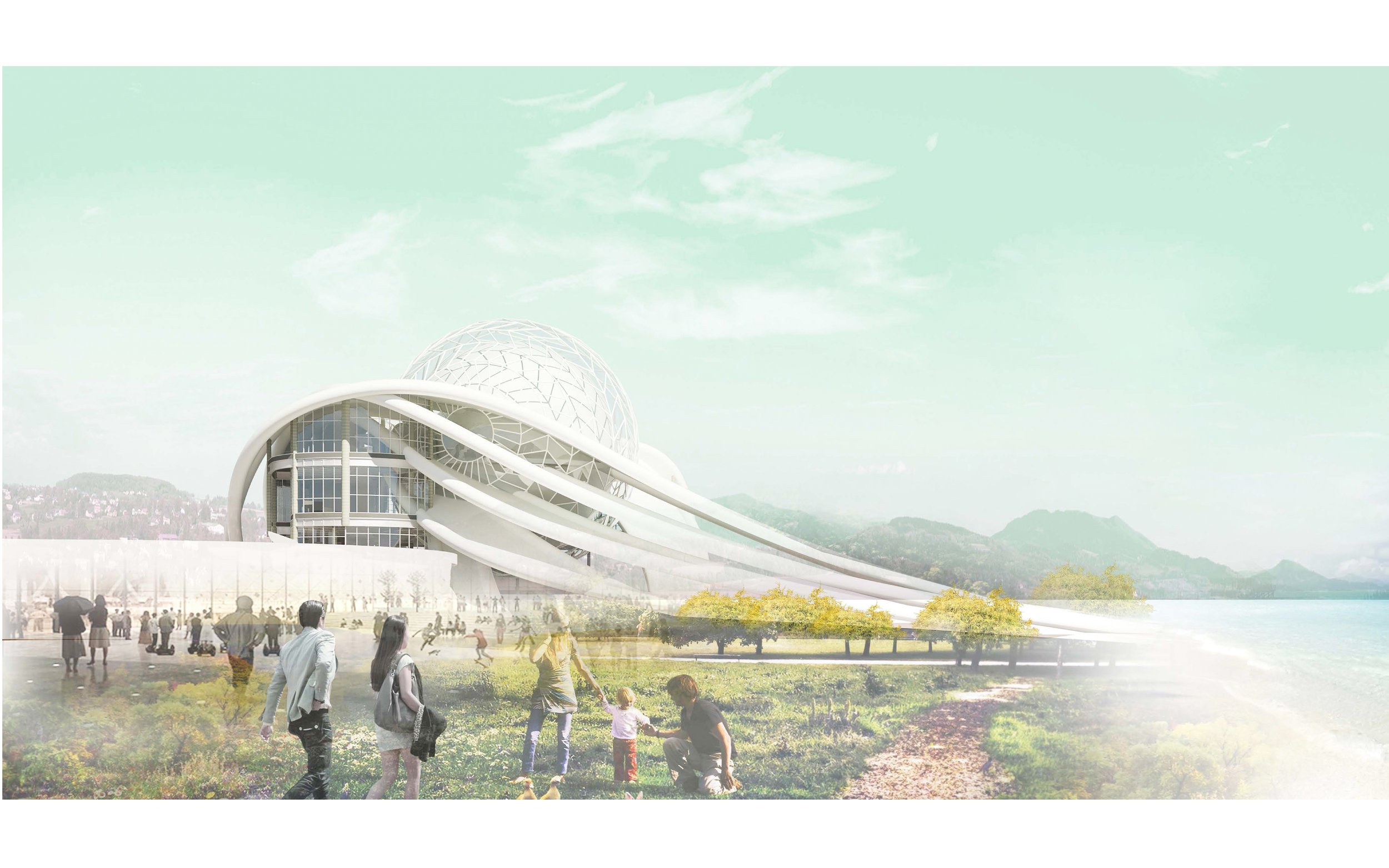
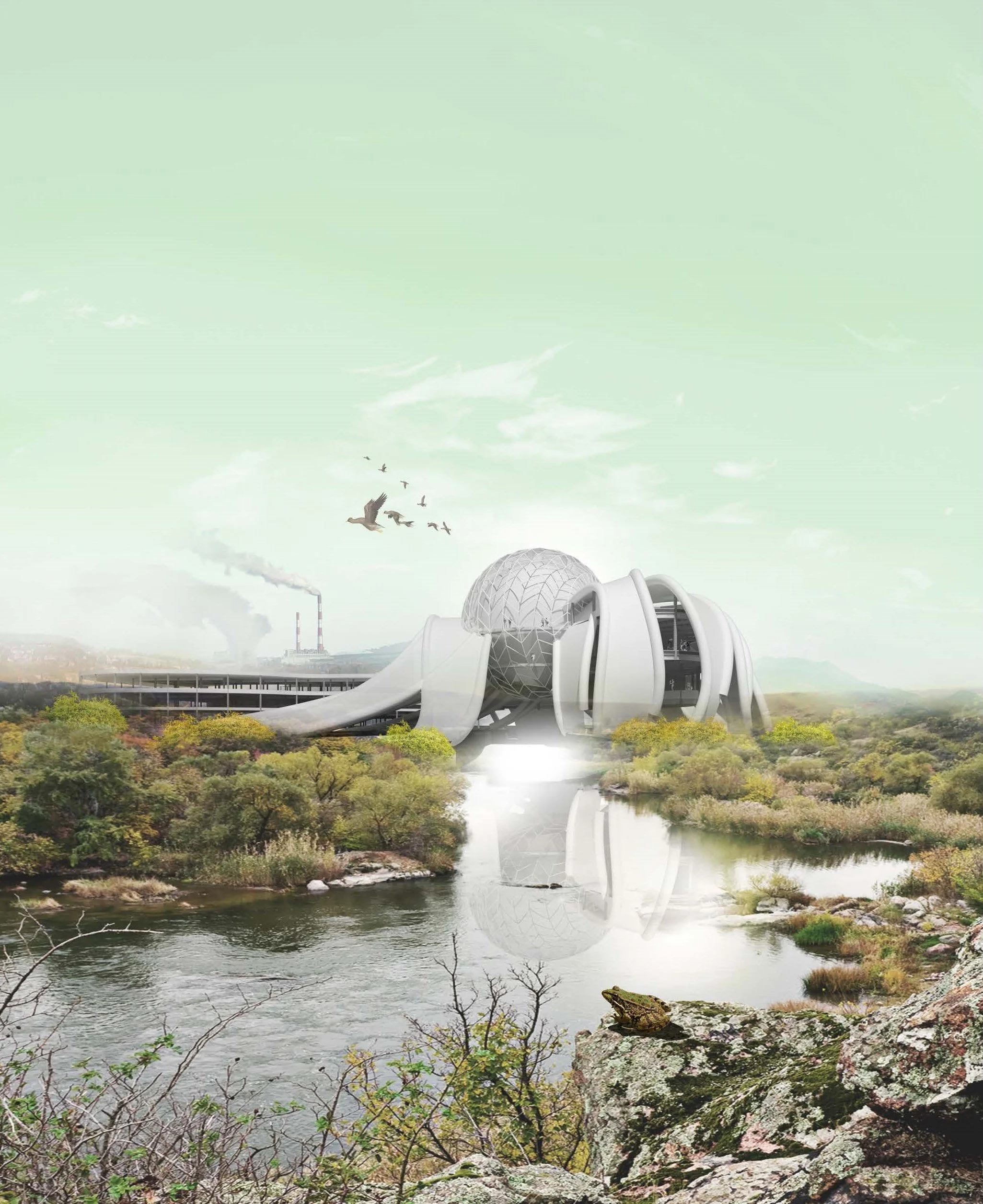
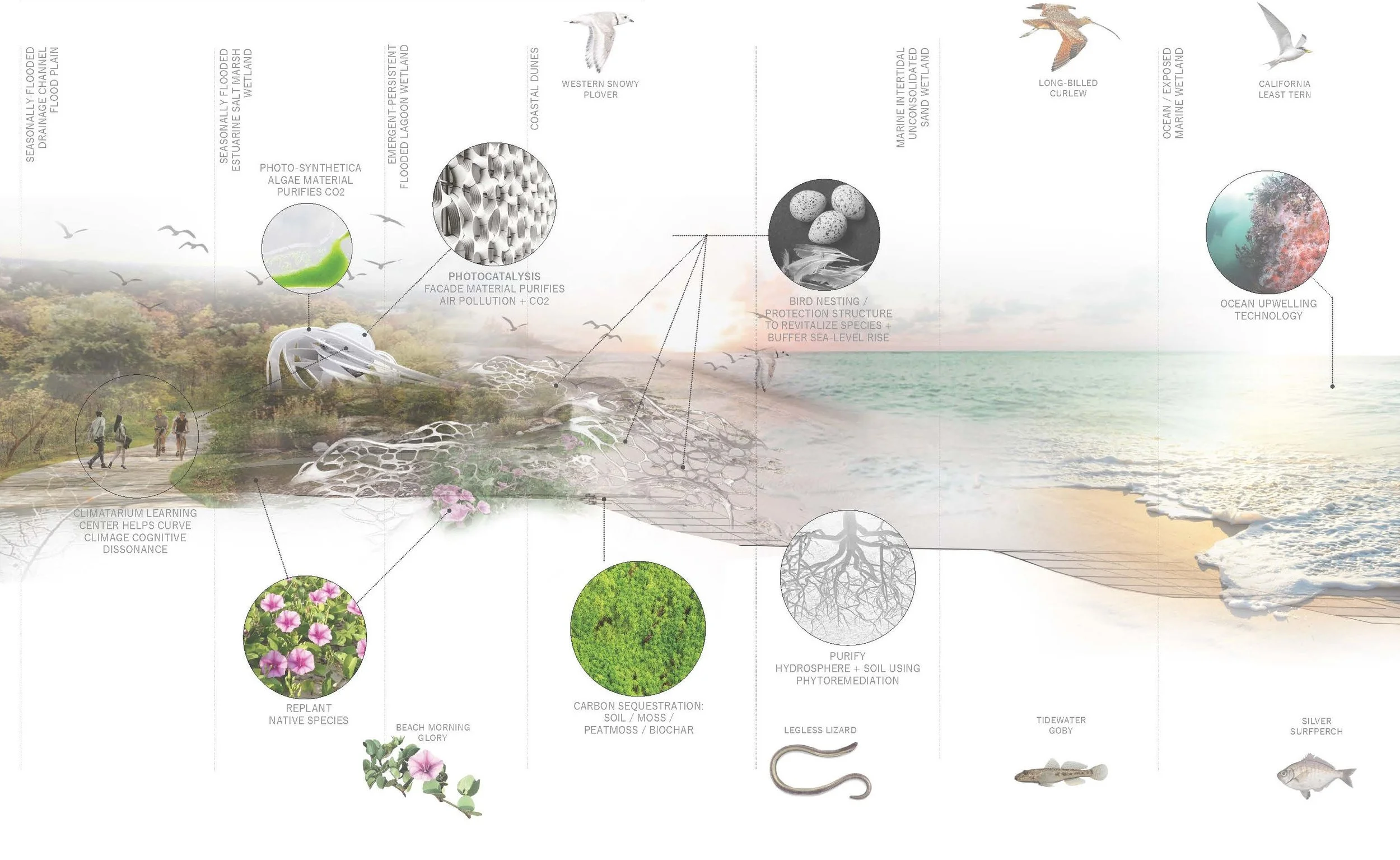
The Climatarium is a speculative architectural thesis and environmental research project developed in response to the accelerating ecological conditions of the Anthropocene. Conceived as a new civic typology dedicated to climate awareness, environmental inquiry, and public engagement, the project investigates how architecture might operate not only as shelter or infrastructure, but as an active instrument for ecological consciousness, education, environmental performance, and environmental repair. Drawing from interdisciplinary research in ecology, cartography, climate science, landscape systems, and atmospheric representation, the project explores architecture’s potential to visualize environmental phenomena while simultaneously operating as adaptive ecological infrastructure within vulnerable coastal territories.
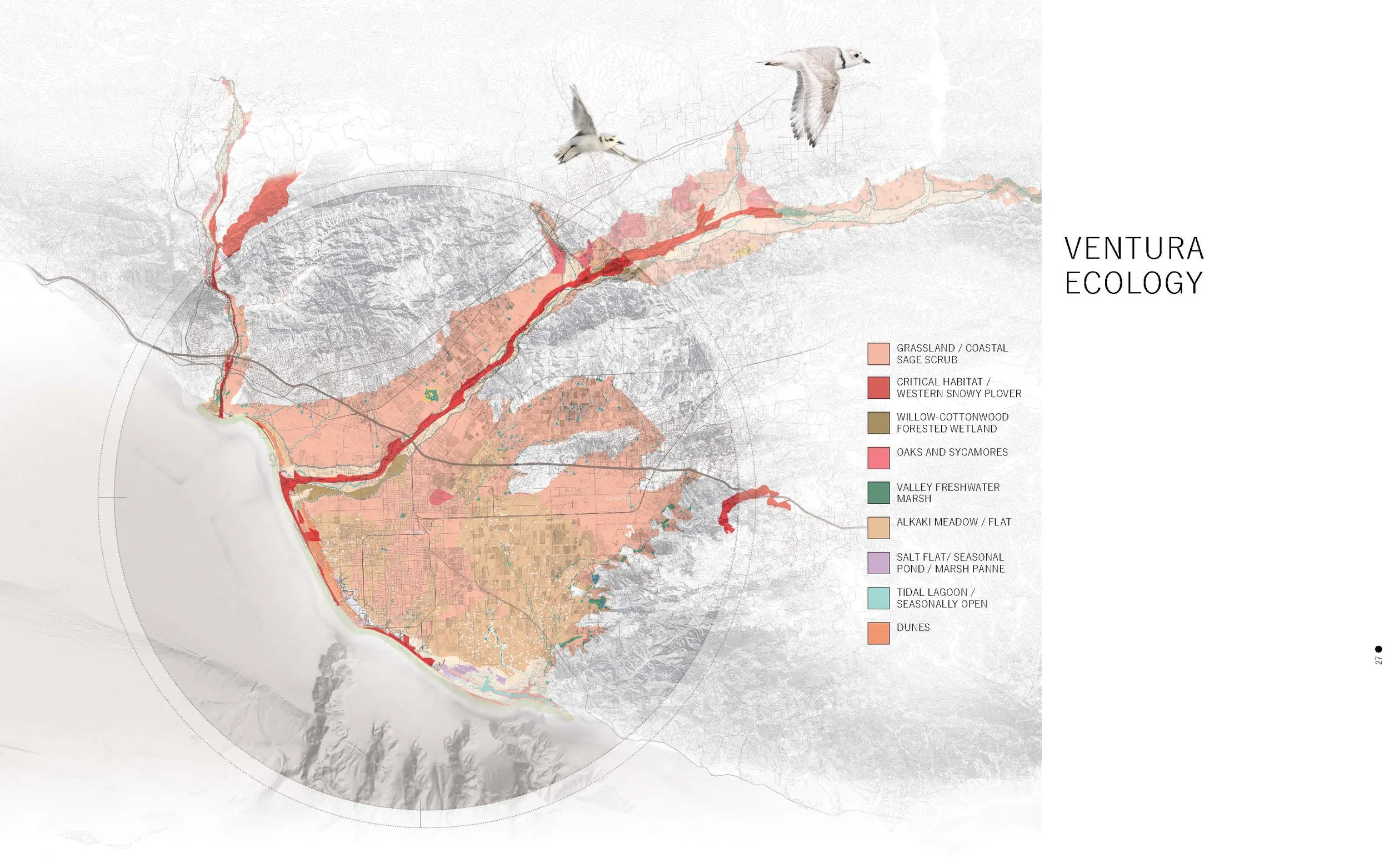
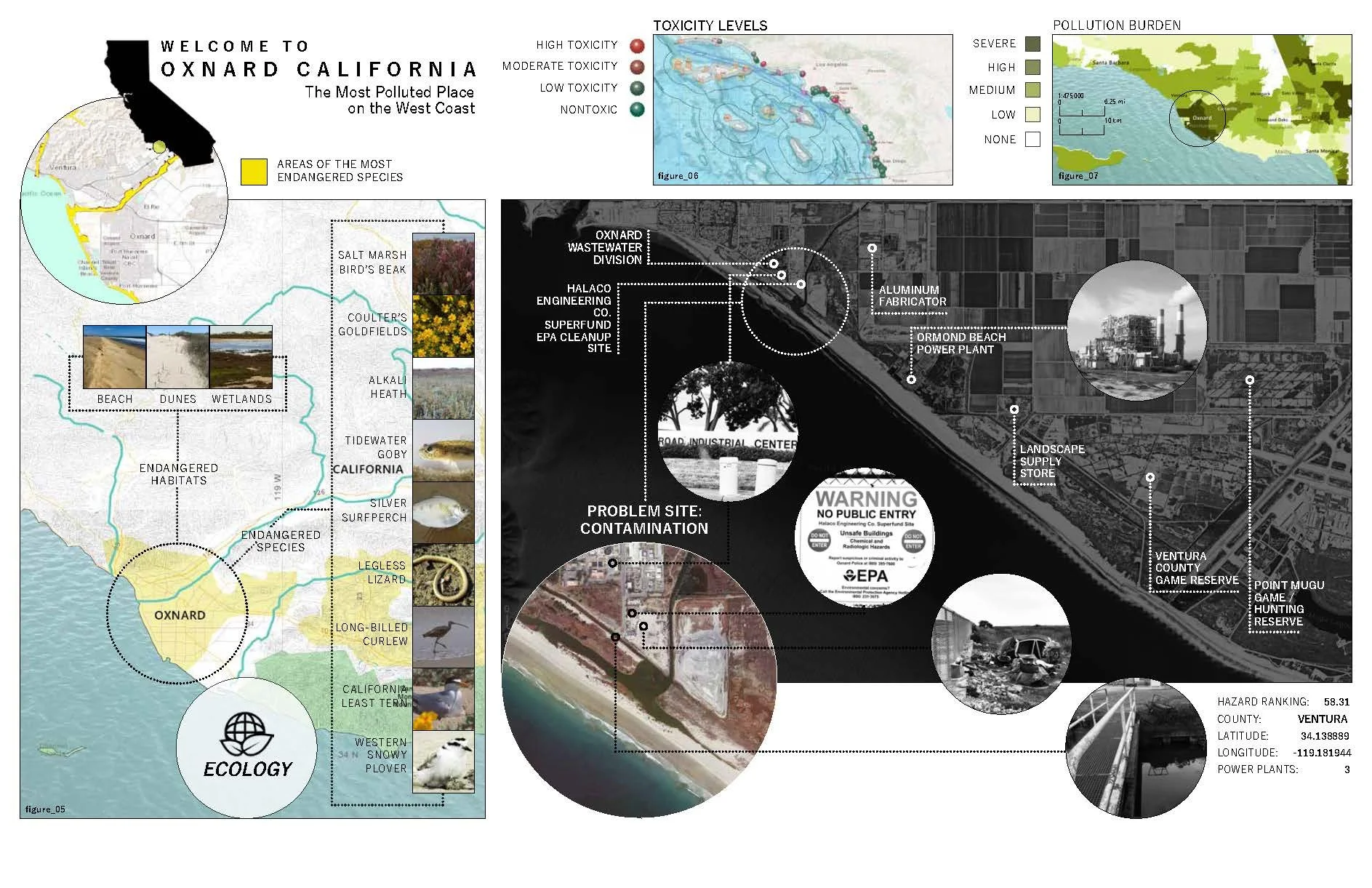
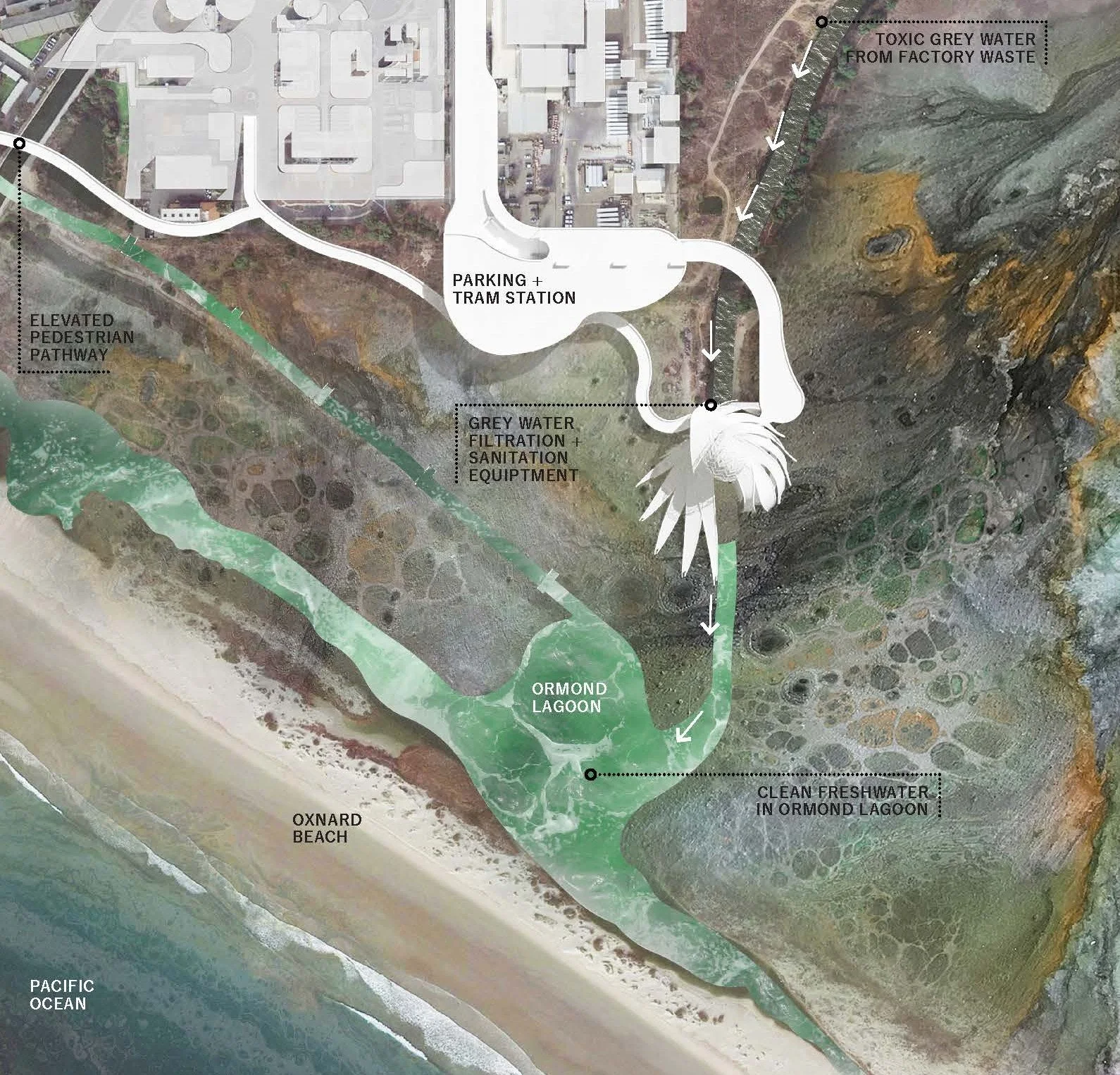
Situated along the vulnerable coastline of Oxnard, California, the project was informed by extensive contextual and GIS-based research analyzing regional toxicity levels, industrial contamination, endangered habitats, hydrological systems, zoning conditions, and projected sea-level rise. Oxnard was selected as the primary site due to its proximity to heavily polluting industrial infrastructure, ecologically sensitive wetlands, and communities disproportionately affected by environmental hazards. The proposal investigates architecture as both environmental infrastructure and public interface—positioning the project as a catalyst for ecological restoration, environmental education, climate resilience, and performative engagement with coastal systems along the Ormond Beach corridor.
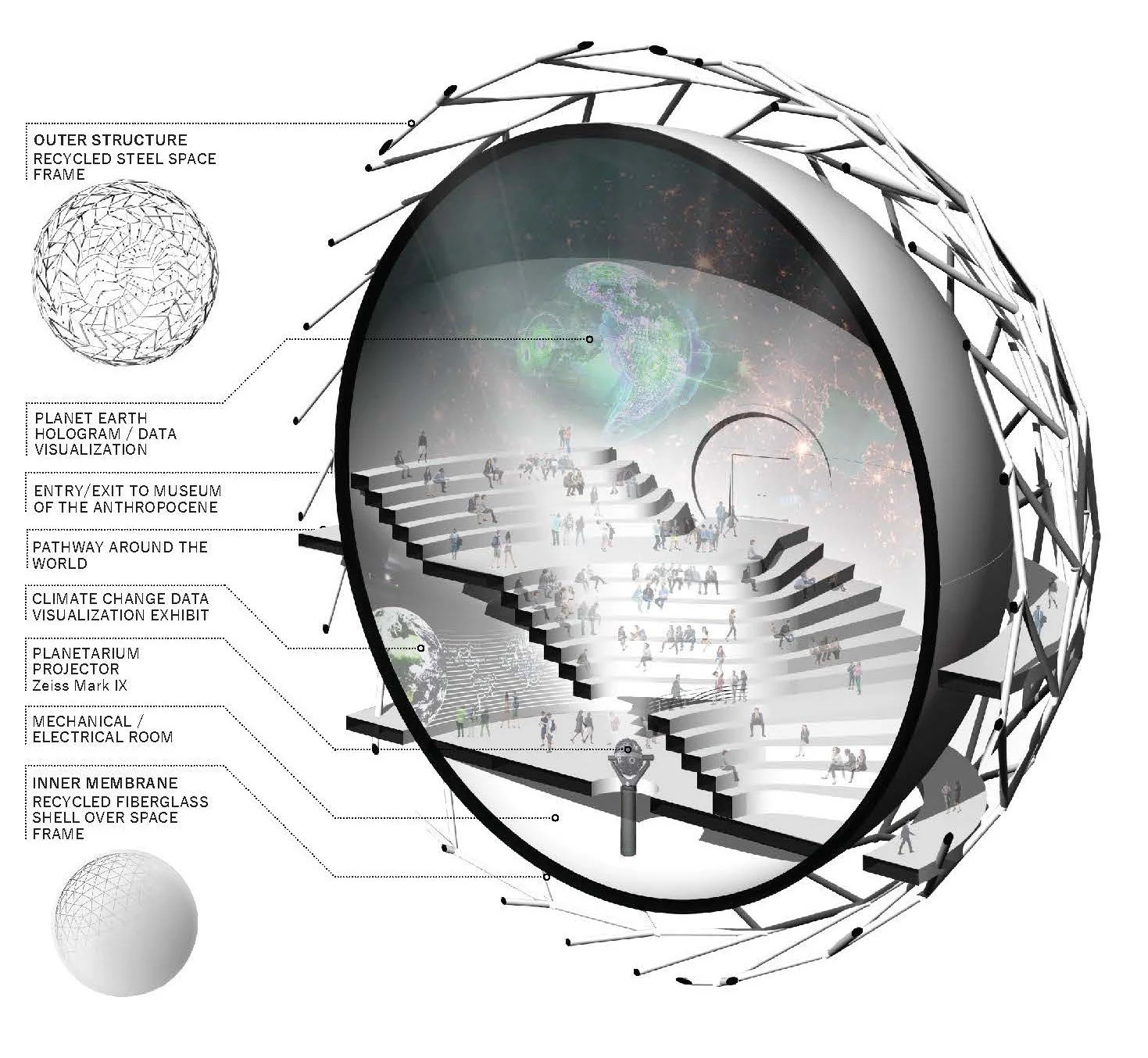
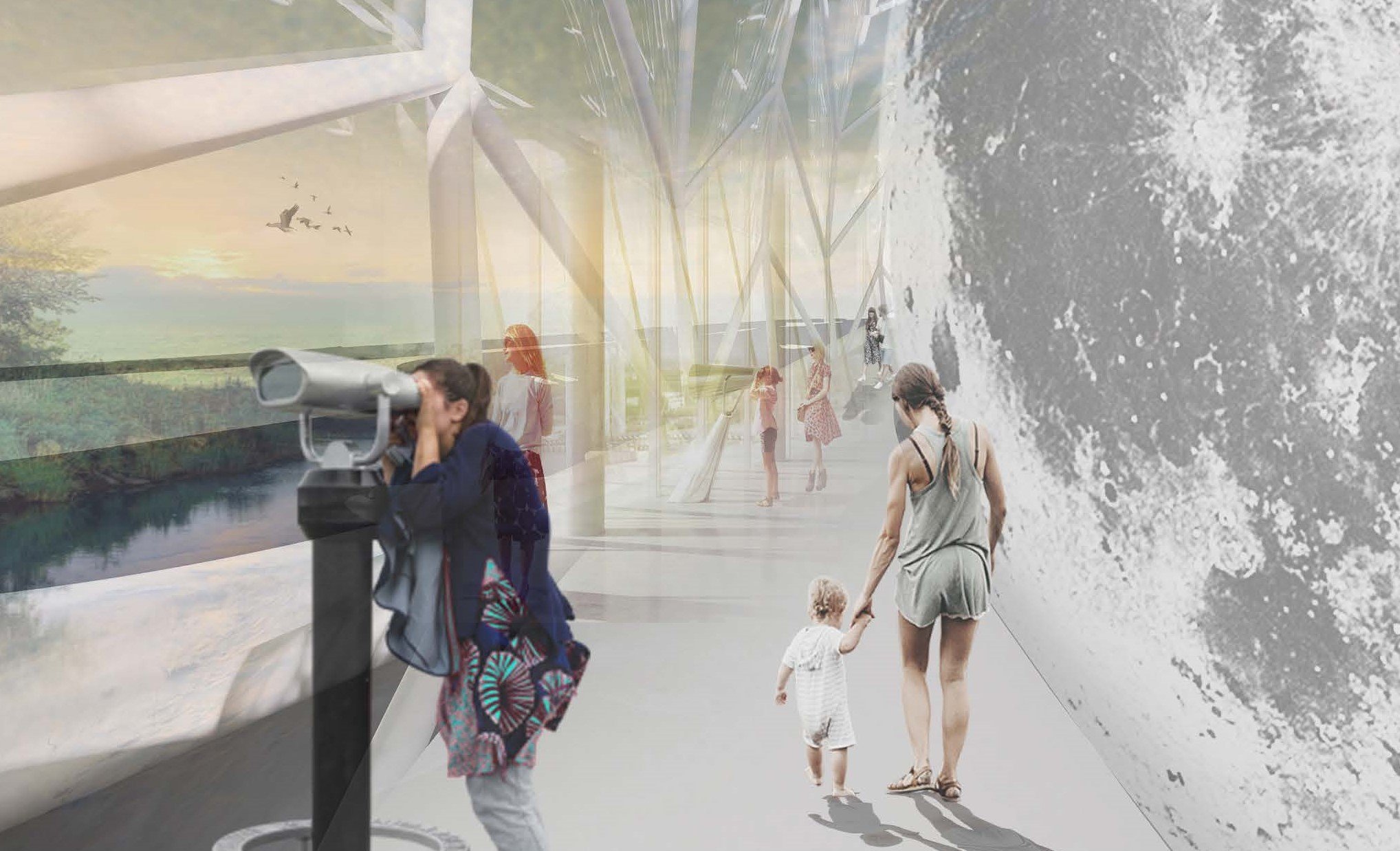
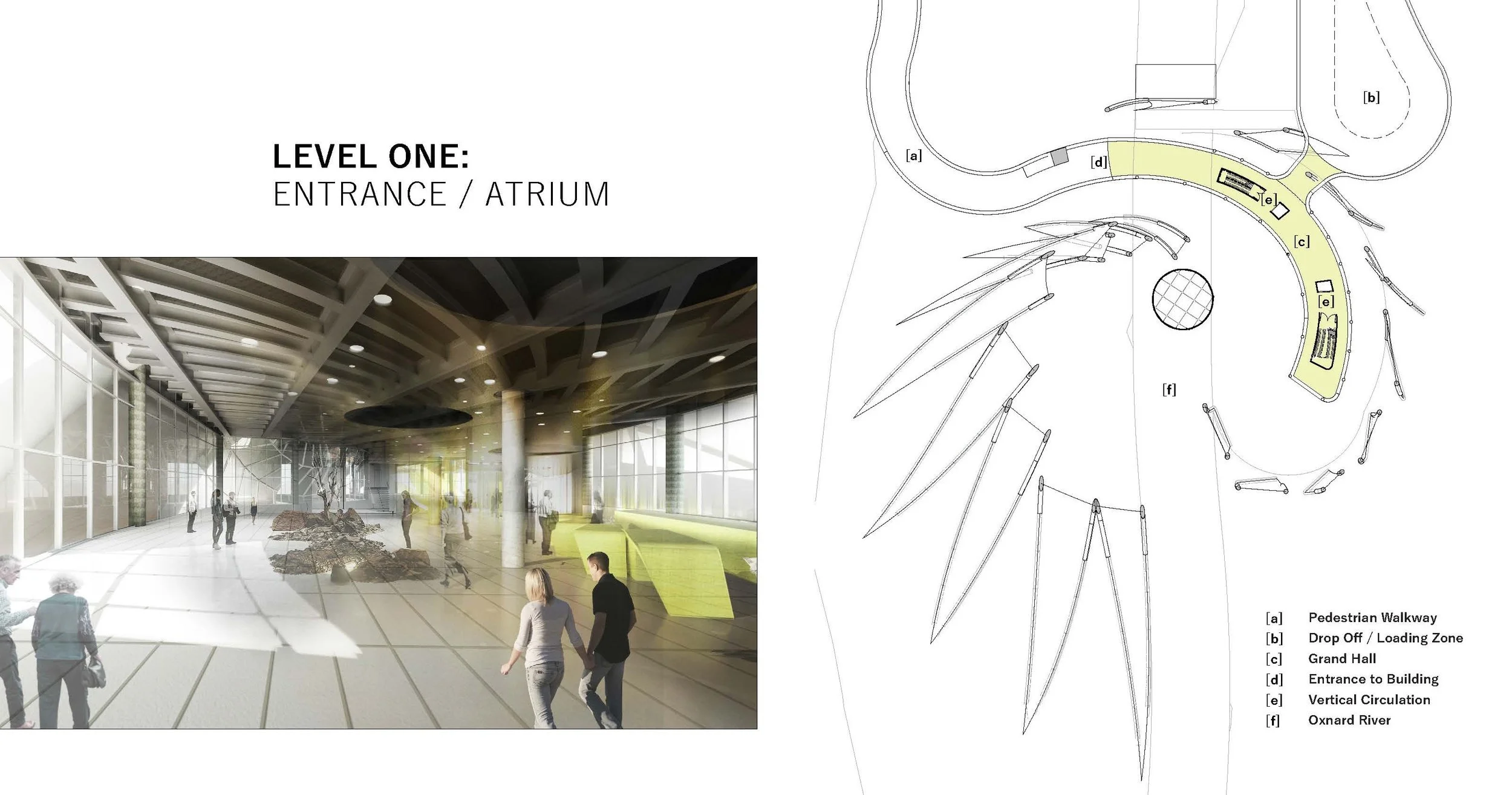
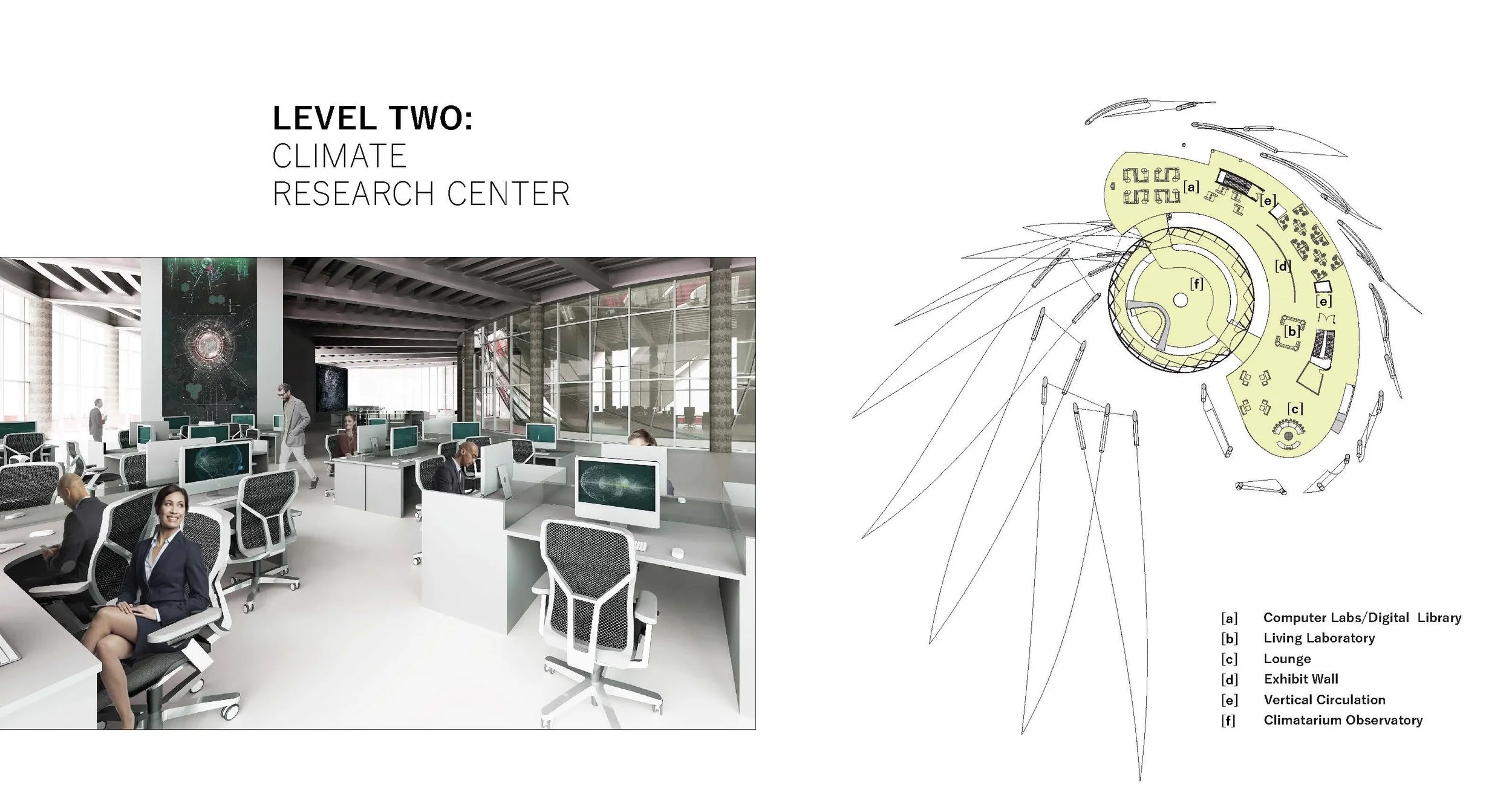
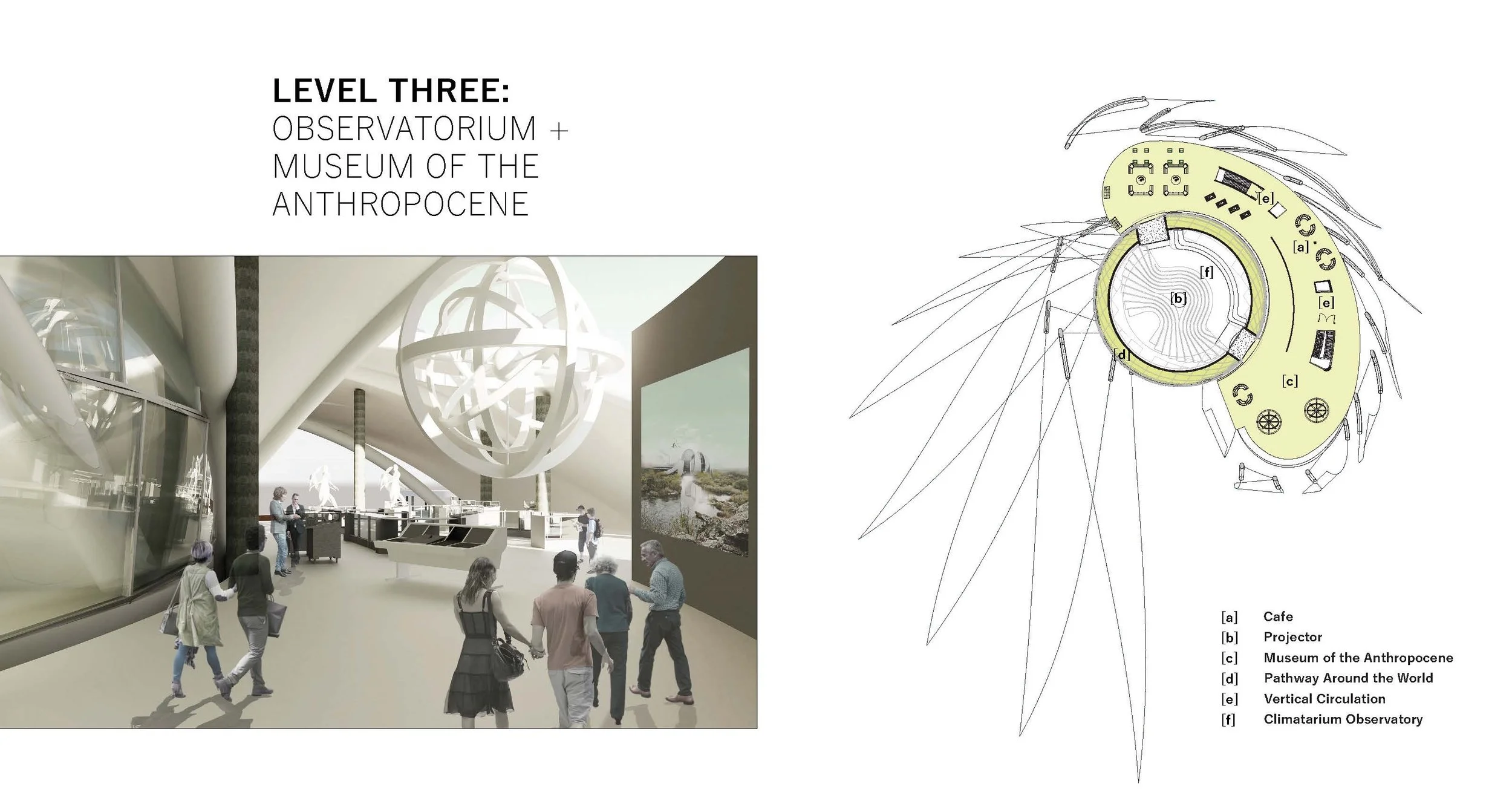
Programmatically, The Climatarium combines a climate research center, educational observatory, environmental conservation landscape, and the “Museum of the Anthropocene” into a unified architectural ecosystem. The project incorporates living laboratories, exhibition spaces, climate data visualization environments, research facilities, biosphere preservation areas, public pathways, and immersive educational environments designed to engage visitors through direct spatial and sensory experience. The “Observatorium” functions as a central civic and atmospheric space for public lectures, data projections, exhibitions, and environmental storytelling, while elevated circulation systems, integrated wave-energy infrastructure, and adaptive coastal frameworks respond dynamically to rising sea levels and changing environmental conditions.
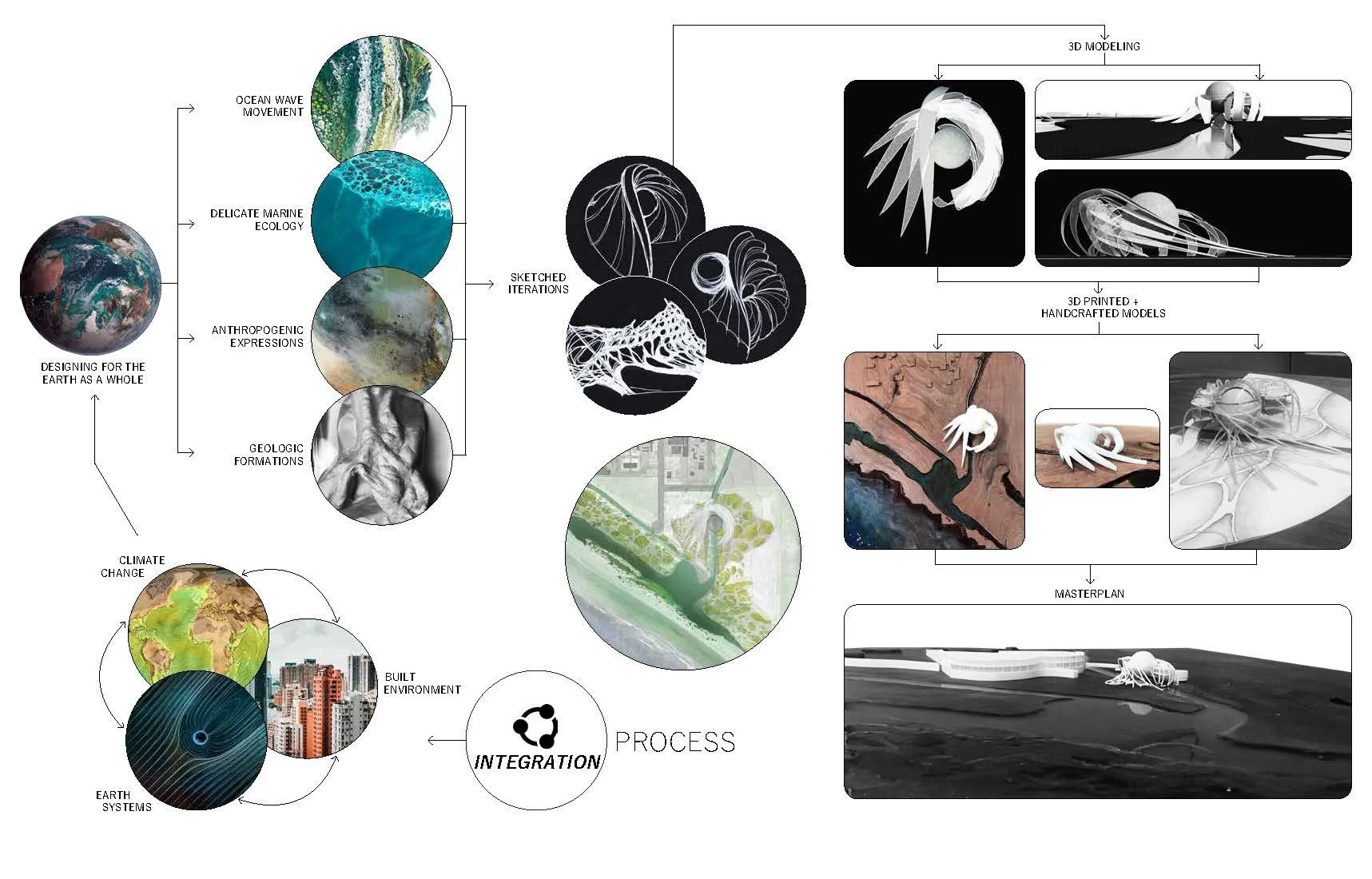
The conceptual and formal development of the project emerged through an extensive process of sketching, fluid dynamics studies, manipulated material experiments, physical model fabrication, computational modeling, and atmospheric visualization techniques. Explorations involving melted synthetic materials, oil-and-water studies, marine ecologies, anthropogenic landscapes, and geologic formations informed the project’s architectural language, structural logic, and tectonic evolution. These investigations sought to translate environmental processes into spatial, material, and atmospheric architectural experiences capable of communicating the dynamic relationship between human activity, ecological systems, and climate transformation.
Developed as both a speculative design investigation and a broader environmental thesis, The Climatarium reflects an interdisciplinary approach to architecture that integrates research, narrative, ecology, systems thinking, environmental performance, and atmospheric representation in an effort to reimagine the relationship between architecture, technology, ecology, and the natural world within an era of accelerating environmental transformation.
The project was recognized with a 2019 AIA San Diego Design Award for its interdisciplinary approach to environmental research, speculative architectural thinking, and atmospheric representation.

Project developed by Melanie Gilbert as a speculative architectural thesis and environmental research investigation. All drawings, renderings, diagrams, models, visualizations, graphic layouts, and design development presented herein were created by Melanie Gilbert unless otherwise noted.